
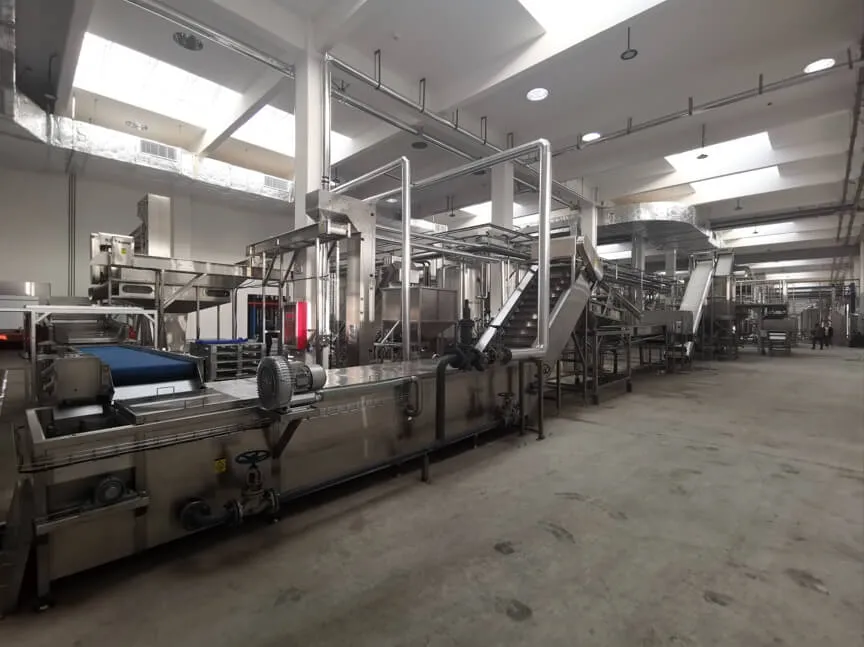
Choosing the right juice filling line is one of the most important investments for beverage factories. A well-designed system improves production efficiency, ensures stable product quality, reduces labor costs, and supports long-term business expansion.
This 2026 buying guide helps you understand the key components, technologies, selection criteria, and the latest industry trends before purchasing a juice filling line.
1. What Is a Juice Filling Line?
A juice filling line is a complete production system used to process, sterilize, fill, cap, and package fruit juices and beverages.
Modern lines integrate automation, intelligent control, and CIP/SIP systems to ensure hygiene and high-volume continuous production.
A standard line typically includes:
- Fruit washing & crushing system
- Juice extraction & filtration
- Mixing & homogenizing system
- Pasteurization or UHT sterilization
- Filling & capping machine
- Labeling & packaging equipment
- Conveyor systems & inspection units
2. Types of Juice Filling Technologies
① Hot Filling
Used for juices with pulp, tea beverages, and functional drinks.
Advantages: thermal sterilization, high food safety.
Suitable for: PET bottles, glass bottles.
② Aseptic Filling
Ensures ultra-clean environment for long shelf life.
Advantages: retains flavor & nutrients, no preservatives.
Suitable for: premium juices, NFC juice, dairy beverages.
③ Cold Filling
Product kept at low temperature to ensure freshness.
Advantages: minimal heat damage, better taste.
Suitable for: fresh juice and refrigerated beverages.
3. Key Components of a Juice Filling Line
1. Juice Preparation System
Includes mixing tanks, sugar-dissolving tanks, homogenizers.
Purpose: stabilize product taste and texture.
2. Sterilization Equipment
UHT or plate heat exchangers.
Ensures microbiological safety.
3. Filling Machine
The core part of the production line.
Common types:
- Gravity filling machine
- Hot-fill machine
- Aseptic filling machine
- Rotary filling machine
4. Capping Machine
Ensures precise torque, strong sealing, and anti-leak performance.
5. Labeling & Packaging
Sleeve labeling, shrink wrapping, carton packaging—depending on product requirements.
4. How to Choose the Best Juice Filling Line (2026 Buying Guide)
① Determine Production Capacity
Typical capacities: 1,000–2,000 BPH, 5,000–12,000 BPH, 20,000+ BPH
Choose based on your current demand and future expansion.
② Identify Bottle Types & Product Features
- PET bottle / Glass bottle / Can
- With or without pulp
- Hot-fill, cold-fill, aseptic
These will influence the type of filling valve and sterilization system needed.
③ Evaluate Automation Level
Modern lines integrate:
- PLC control + touchscreen HMI
- Automatic CIP cleaning
- Real-time production data monitoring
- Self-diagnosis for maintenance
Higher automation = lower labor cost.
④ Consider Hygiene and Safety Standards
Look for:
- SUS304 / SUS316L stainless steel
- Food-grade pipes and valves
- Hygienic design with smooth surfaces
- EU CE certification / ISO standards / FDA compliance
⑤ Energy Consumption and Cost Efficiency
Pay attention to:
- Heat recovery technology
- Servo motors for precise control
- Low-waste filling valves
This has long-term impact on operating cost.
⑥ After-Sales Service & Spare Parts
Choose manufacturers that offer:
- Full installation & commissioning
- Training for operators
- 24/7 technical support
- Global spare parts supply
5. Latest Trends for Juice Filling Lines (2026)
Smart Manufacturing
- Remote diagnostics
- Predictive maintenance
- Real-time monitoring through cloud systems
Eco-Friendly & Lightweight Packaging
- Reduced PET bottle weight
- Energy-saving sterilization technologies
High-Viscosity & Pulp Juice Processing
Optimized valves and anti-blocking systems.
Modular Production Lines
Easier upgrades and future expansion.
6. Recommended Applications
A modern juice filling line can be used for:
- Mango juice
- Orange juice
- Apple juice
- Mixed fruit beverages
- NFC cold-pressed juice
- Vitamin drinks
- Herbal beverages
Applicable for both small factories and large beverage groups.