
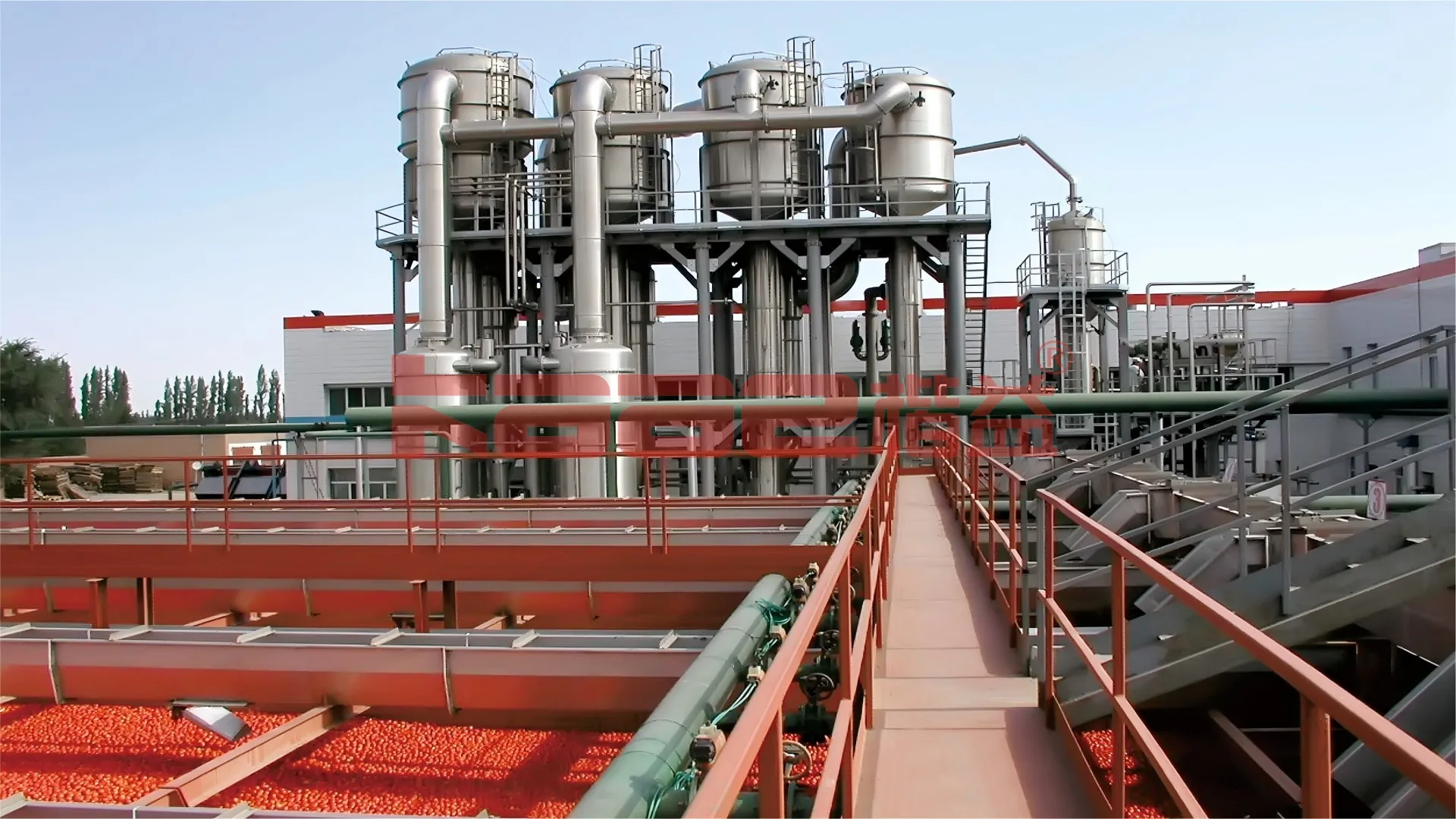
Tomato paste is a highly concentrated tomato product widely used in food manufacturing, catering, and household cooking. Unlike simple tomato purée, tomato paste requires precise control over raw material quality, thermal processing, concentration technology, and hygienic handling. A well-designed tomato paste manufacturing process ensures consistent color, flavor, viscosity, and microbiological stability while maximizing yield and efficiency.
This article provides an in-depth look at how tomato paste is manufactured in modern industrial facilities.
1. Raw Tomato Selection and Quality Control
The foundation of high-quality tomato paste begins with raw material selection. Industrial tomato paste production typically uses processing tomato varieties bred for:
- High soluble solids (Brix 4.5–6.5)
- Intense red color (high lycopene content)
- Firm flesh and low juice separation
- Uniform ripening
Incoming tomatoes undergo strict inspection for:
- Ripeness and color uniformity
- Absence of rot, mold, or insect damage
- Low pesticide residue levels
Rejected tomatoes are removed before processing to prevent flavor defects and microbial contamination.
2. Washing and Sorting
Tomatoes are conveyed into bubble washing systems or spray washers, where soil, leaves, and foreign materials are removed. This stage is critical for food safety and equipment protection.
After washing, optical or manual sorting systems may be used to eliminate green, damaged, or overripe tomatoes. Effective sorting directly impacts final paste color and taste stability.
3. Crushing and Preheating (Hot Break / Cold Break)
Washed tomatoes are mechanically crushed to break down the flesh and release juice. Immediately after crushing, the tomato mash enters a preheating stage, which determines the functional properties of the final product.
Cold Break Process (55–65°C)
- Preserves fresh tomato flavor
- Lower viscosity
- Used for sauces and juice bases
Hot Break Process (85–95°C)
- Inactivates pectin-degrading enzymes
- Produces higher viscosity and thicker paste
- Preferred for tomato paste and ketchup
For tomato paste, the hot break process is standard, as it ensures stable texture and higher consistency.
4. Pulping and Refining
The heated tomato mash is fed into pulping and refining machines, typically using multi-stage sieves.
Functions include:
- Separating seeds, skins, and fibers
- Producing smooth tomato pulp
- Controlling particle size and texture
Refining efficiency affects yield, smoothness, and mouthfeel of the paste.
5. Evaporation and Concentration
The core step in tomato paste manufacturing is water removal. Tomato pulp is concentrated using multi-effect vacuum evaporators, which operate at reduced pressure to lower boiling temperature.
Key advantages of vacuum evaporation:
- Preserves natural tomato color and flavor
- Minimizes thermal damage
- Improves energy efficiency
Tomato paste is typically concentrated to:
- 28–30% Brix (light concentrate)
- 36–38% Brix (medium concentrate)
- 38–40%+ Brix (heavy concentrate)
Precise Brix control is essential for product standardization and downstream applications.
6. Deaeration and Homogenization
Before sterilization, the concentrated paste may undergo deaeration to remove dissolved oxygen. This step:
- Prevents oxidation
- Improves color stability
- Enhances shelf life
Homogenization may also be applied to achieve uniform texture and prevent phase separation during storage.
7. Sterilization
Tomato paste must be sterilized to ensure microbiological safety. Industrial sterilization methods include:
- Tubular or plate heat exchangers
- High-temperature short-time (HTST) treatment
Temperature and holding time are carefully controlled to eliminate pathogens while minimizing flavor degradation.
8. Aseptic Filling and Packaging
After sterilization, tomato paste is transferred to an aseptic filling system. Packaging options include:
- Aseptic bags in drums (200–220 kg)
- Aseptic cartons
- Industrial bulk containers
Aseptic filling prevents secondary contamination and allows long-term storage without preservatives.
9. Storage and Quality Assurance
Finished tomato paste is stored in temperature-controlled warehouses. Quality control tests include:
- Brix and viscosity
- Color value (a/b ratio)
- pH and acidity
- Microbial analysis
- Sensory evaluation
Consistent testing ensures each batch meets commercial and regulatory standards.
The tomato paste manufacturing process is a complex integration of raw material control, thermal processing, mechanical separation, evaporation technology, and aseptic handling. Each stage plays a critical role in determining the final product’s quality, yield, and shelf life.
Modern tomato paste production is not simply about concentration—it is about precision, efficiency, and consistency. For manufacturers, investing in advanced processing technology and strict quality control is essential to compete in the global tomato products market.